
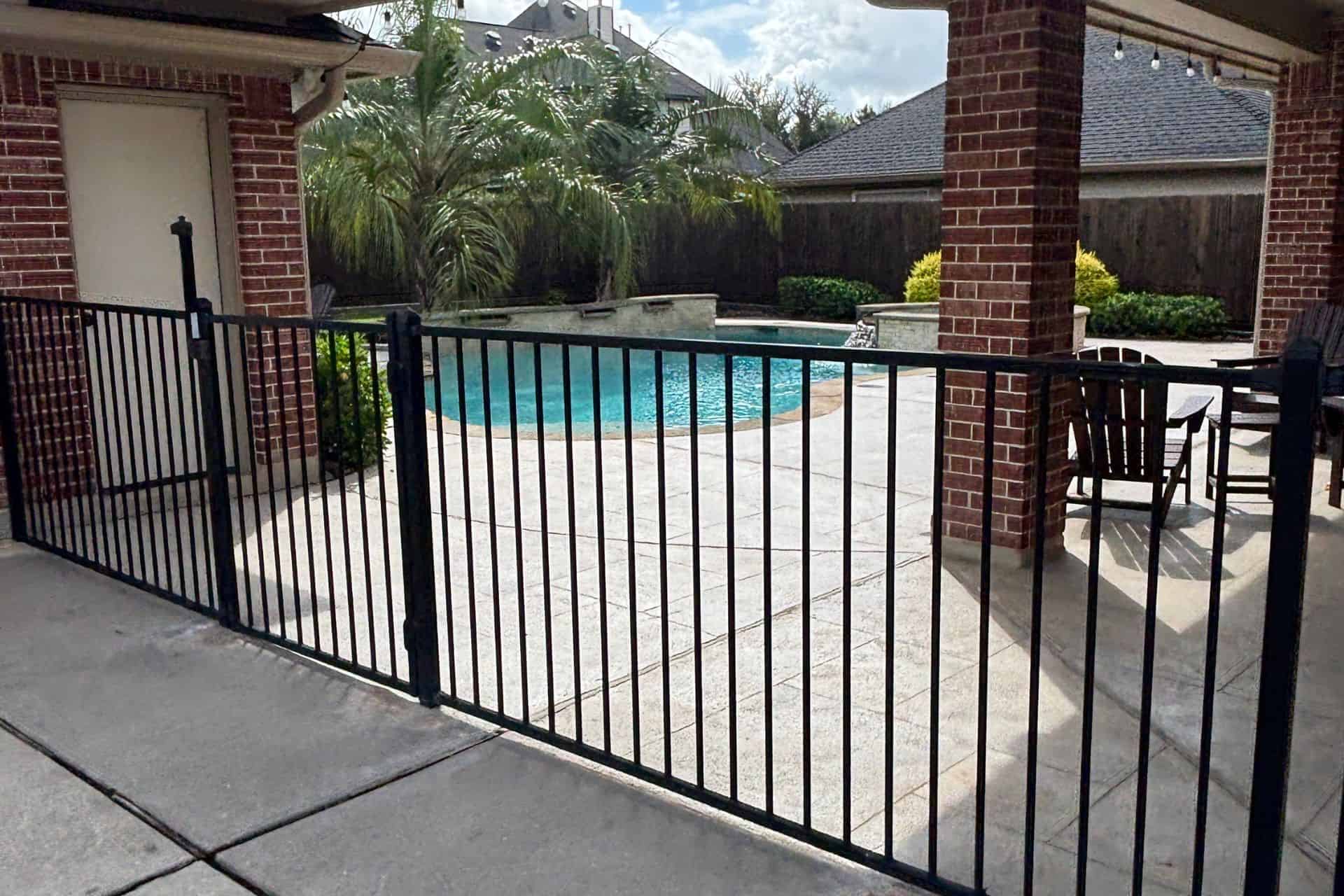
Steel Fence vs. Wood Fence in Austin, Texas — Which One Is Actually Worth It? (2026 Guide)
By the team at Proud Steel Fence Co | Serving Travis, Williamson & Hays Counties
Steel fence vs. wood fence is the question we hear from Austin homeowners more than any other. And the honest answer isn’t just “steel is better” — it depends on what you’re trying to accomplish, what your property looks like, and how much you want to think about your fence over the next 10 to 20 years.
That said, in Central Texas specifically — where summers run well above 100°F, where clay soil expands and contracts with every rain cycle, and where UV exposure starts breaking down organic materials faster than most people expect — steel has a clear, documented advantage in long-term performance. The question is whether that advantage justifies the difference in upfront cost for your specific situation.
This guide gives you the honest comparison. No sales pitch. Just what we’ve seen on the ground across jobs in Cedar Park, West Lake Hills, Pflugerville, Barton Creek, Georgetown, and dozens of other Austin-area neighborhoods.
The Short Answer
If you want privacy fencing in a backyard where budget is the priority and you’re comfortable with ongoing maintenance — cedar wood is a reasonable choice, and a lot of Austin homeowners go that route.
If you want perimeter fencing, driveway gates, front yard fencing, or anything visible from the street — and you want it to still look good in 20 years without staining it every two seasons — steel is the right material for Central Texas.
The longer you plan to stay in your home, the more clearly steel wins the cost-per-year math.
What Austin’s Climate Actually Does to a Wood Fence
Before we get into the side-by-side comparison, it’s worth being specific about why wood struggles in this market. This isn’t generic fencing advice — it’s what happens to wood fences in Travis, Williamson, and Hays counties.
The Heat and UV Problem
Austin averages over 300 days of sunshine per year and routinely sees weeks of 100°F+ temperatures in July and August. UV radiation doesn’t just bleach wood gray — it breaks down lignin, the natural polymer that gives wood its structural rigidity. In high-UV climates like Central Texas, an unprotected wood fence can begin visible surface degradation within 12 to 18 months of installation. Even cedar, which has natural oils that resist moisture better than pine, will surface-crack and dry out under sustained UV exposure without regular sealing.
Once those surface cracks form, the cycle accelerates — and no coating on the planet stops wood from going through it. That’s why the coating you choose on a steel fence matters so much more than most people realize. Moisture from Austin’s summer thunderstorms penetrates the cracks, the wood swells, then the heat dries it back out and the cracks widen. Season after season, the boards weaken from the inside.
The Soil Problem
The dominant soil type across East Austin, Round Rock, Pflugerville, Manor, and large portions of the Austin metro is Blackland Prairie Vertisol — expansive black clay that shrinks and cracks in dry summers, then swells dramatically when rain arrives. Wood fence posts set in this soil are under constant movement stress. Even pressure-treated posts will begin to shift, heave, and eventually lean as the clay cycles through seasons.
This is specifically why we’ve seen so many wood fences in newer neighborhoods throughout Cedar Park and Leander start leaning within five to seven years — not because of poor materials, but because wood posts and expanding clay soil are a bad long-term combination. The fence looks fine from the street until it doesn’t, and then it fails fast.
In the rocky limestone terrain of West Lake Hills, Barton Creek, and Georgetown’s Hill Country properties, the challenge is different — posts have to be drilled through caliche and set with precision — but wood posts still rot at ground level regardless of what’s below them. Ground contact and moisture are what kill wood posts, and no part of Austin is dry enough to make that a non-issue.
The Maintenance Reality
A cedar fence in Austin requires staining or sealing every two to three years to maintain its appearance and structural integrity. Skip that maintenance cycle — which most homeowners do at least once — and the degradation curve steepens quickly. Factor in the cost of professional staining, board replacement over time, and the eventual full replacement that most wood fences in Central Texas need at the 12 to 15 year mark, and the “cheaper upfront” equation shifts significantly.
Steel vs. Wood — Side-by-Side Comparison
Upfront Cost
Wood fence (cedar, installed): $27 – $40 per linear foot Steel fence (ornamental, installed): $30 – $55 per linear foot
The upfront cost difference is real but narrower than most people expect — especially when you account for the fact that quality steel installation includes posts, concrete footings, and fabrication that’s built to last. The entry-level price gap between cedar and steel is often as little as $5 to $10 per linear foot on a standard residential job.
For a 150-foot residential fence:
- Cedar (installed): approximately $4,050 – $6,000
- Steel (installed): approximately $4,500 – $8,250
Long-Term Cost
This is where the comparison really turns.
A well-maintained cedar fence in Austin lasts 10 to 15 years. A steel fence with a quality powder-coat finish lasts 25 to 30 years or more with minimal maintenance beyond an occasional rinse. Factor in two full cedar fence replacements over 30 years — plus staining costs every two to three years across that timeline — and the 30-year cost of wood fencing often exceeds the upfront cost of steel by a significant margin.
Maintenance
Wood: Requires staining or sealing every 2 to 3 years. Regular inspection for rot, warping, and pest damage. Individual boards need replacement as they fail. Posts are the highest-risk failure point in Austin’s clay soil.
Steel: Powder-coat finish requires no painting, staining, or sealing. Wipe down or rinse as needed. Inspect welds and hardware annually. If a section is damaged, it can be repaired on-site rather than requiring panel replacement.
At Proud Steel Fence Co, we weld every fence on-site. That means if a panel ever needs attention — from a vehicle impact, storm damage, or anything else — we can come back and repair the exact weld rather than replacing an entire section.
Durability in Austin’s Conditions
Wood: Vulnerable to UV degradation, moisture cycling, ground-level rot, insect damage (termites are active throughout Central Texas), and soil movement. Even quality cedar fencing in Austin typically shows visible wear within 5 to 7 years without consistent maintenance.
Steel: Unaffected by UV radiation. Does not rot, warp, crack, or splinter. Not a food source for termites. A quality powder-coat finish prevents rust — and with the on-site welding approach we use at Proud Steel, there are no exposed cut edges or compromised coatings at connection points. Steel handles Austin’s heat, storms, and soil movement without the cumulative degradation that affects organic materials.
Appearance Over Time
A new cedar fence looks great. After two Austin summers without staining, it looks like every other weathered fence in the neighborhood. After ten years, most cedar fences in the Austin area have had at least one board section replaced, show graying and weathering throughout, and are beginning to show lean at the post line.
A steel fence looks the same in year 15 as it did in year one — if it was fabricated and finished correctly to begin with. Powder-coated black steel fencing, which is the most popular finish across Austin’s luxury neighborhoods, doesn’t fade, doesn’t gray, and doesn’t require seasonal attention to hold its appearance.
Curb Appeal and Property Value
For front yard fencing, driveway gates, and any fencing visible from the street, steel wins on aesthetics without question. The ornamental steel look — whether flat top, spear top, or decorative scroll — reads as a premium material and signals care for a property’s exterior in a way that a wood privacy fence simply doesn’t from the curb.
In neighborhoods like Tarrytown, Barton Creek, Rollingwood, and Bee Cave, well-designed steel fencing is consistent with the architecture and property values. Wood privacy fencing in those same neighborhoods often looks mismatched with the surrounding homes.
For backyard privacy fencing — where no one except your immediate neighbors sees it — wood remains a legitimate choice where budget is the primary driver.
When Wood Still Makes Sense in Austin
We want to be honest here, because we’re in the steel business but we’re also in the business of giving Austin homeowners useful information.
Cedar wood fencing still makes sense when:
- Budget is the primary driver and you’re working with a tight number on a large backyard perimeter
- You’re selling the home in the next few years and need a fence that looks good now without a long-term maintenance commitment from the next owner
- Your HOA specifically requires a wood privacy fence style on side and rear yards
- You prefer the natural wood look in a backyard that isn’t visible from the street
Even in these cases, we’d recommend steel posts with cedar boards — the posts are what fail first in Austin’s clay soil, and using steel posts eliminates the highest-risk failure point while keeping the overall cost competitive with an all-wood install.
What We See on the Ground Across Austin
In West Lake Hills and Barton Creek, almost no one installs wood fencing for front yards or visible perimeters. The combination of steep limestone lots, high property values, and architectural standards makes ornamental steel the default choice.
In Cedar Park, Leander, and Pflugerville — where a lot of the new construction is happening right now — we see a split: wood for backyard privacy, steel for front yards and driveway gates. It’s a practical combination that most buyers respond well to.
In East Austin and Mueller, flat-top steel fencing with a modern horizontal aesthetic has become the go-to for homeowners renovating older bungalows and new-build infill properties. Cedar privacy fencing reads as dated in that market.
In Dripping Springs, Wimberley, and the Hill Country corridor, the acreage lot sizes mean perimeter runs can be long — and a wood fence on a large Hill Country property that needs full replacement in 12 years is a significant cost. Steel is the better long-term investment at that scale.
The 30-Year Cost Comparison (150-foot fence, Austin TX)
| Cedar Wood | Steel | |
|---|---|---|
| Initial installation | $5,000 | $7,000 |
| Staining/sealing (every 2–3 yrs x 10) | $3,000 | $0 |
| Board replacement (years 5–15) | $1,500 | $0 |
| Full replacement (year 15) | $5,500 | $0 |
| 30-year total | ~$15,000 | ~$7,000 |
Estimates based on current Austin market pricing. Actual costs vary by property size, style, and labor rates.
Frequently Asked Questions
Is steel fencing more expensive than wood in Austin? Upfront, steel typically costs $5 to $15 more per linear foot installed than cedar. Over 20 to 30 years, steel is consistently less expensive when you account for maintenance, board replacement, and full fence replacement costs that wood fencing in Austin’s climate accumulates.
Does a steel fence rust in Austin’s humidity? A properly fabricated and powder-coated steel fence does not rust under normal conditions. The powder-coat finish creates a sealed barrier against moisture. At Proud Steel Fence Co, we weld every fence on-site and apply a quality powder-coat finish — there are no exposed edges or weak points in the coating at connection points.
How long does a wood fence last in Austin, Texas? With proper maintenance — staining or sealing every two to three years — a quality cedar fence in Austin lasts 10 to 15 years. Without consistent maintenance, visible degradation often begins within five to seven years in Central Texas conditions.
How long does a steel fence last in Austin, Texas? A quality powder-coated steel fence installed with proper concrete footings in Austin typically lasts 25 to 30 years or more. For more detail, read our full post: How Long Does a Steel Fence Last in Austin, Texas?
Which fence is better for Austin’s clay soil? Steel, without question. Steel posts don’t rot, don’t shift with moisture cycling, and don’t heave under the expansion and contraction of Blackland Prairie clay soil. This is one of the most important factors in Austin specifically — and it’s exactly why we’ve written a dedicated post on it: Why Do Fence Posts Fail in Austin, Texas?
Does a steel fence require a permit in Austin? Permit requirements depend on fence height, location, and the specific municipality. Read our full breakdown: Do I Need a Permit to Build a Fence in Austin, Texas?
See What Steel Looks Like on Your Property
If you’re weighing steel vs. wood for an Austin-area property and want a straight answer on what it would cost and what it would look like on your specific lot, reach out to Proud Steel Fence Co. We serve the full Austin metro across Travis, Williamson, and Hays counties — from Tarrytown and Barton Creek in the west to Round Rock, Georgetown, and Leander in the north, through Bee Cave, Lakeway, and Dripping Springs to the southwest, and down through Kyle and Buda in Hays County.
We come to your property, look at your terrain, your soil, your HOA requirements, and your style goals — and we give you a detailed quote, not a ballpark. If you want to know exactly what that process looks like from start to finish, we cover every step in detail Our steel is fabricated on-site, which means every panel is built for your specific driveway, grade, and post spacing. No factory panels shimmed to fit.
Contact Proud Steel Fence Co for a Free Estimate →
Related posts from the Proud Steel blog:
How Much Does an Automatic Gate Cost in Austin, Texas?
How Much Does a Steel Fence Cost in Austin, Texas?
How Long Does a Steel Fence Last in Austin, Texas?
Why Do Fence Posts Fail in Austin, Texas?
Do I Need a Permit to Build a Fence in Austin, Texas?