By the team at Proud Steel Fence Co | Serving Travis, Williamson & Hays Counties
When customers ask us about hot dipped galvanized versus powder coated steel, they’re really asking one thing: which one is going to keep my fence from rusting? Both are good options. Both do the job differently. And honestly, the best answer for a lot of properties is both at once. Let’s break down what each one actually does, because the difference matters more than most fence companies bother explaining.
What Is Hot Dipped Galvanizing?
Hot dipped galvanizing is a chemical process, not just a coating sprayed on top of the steel. The steel gets dipped into a bath of molten zinc, and that zinc actually bonds with the iron in the steel to form a hard alloy layer. It’s not sitting on the surface like paint — it becomes part of the metal.
This matters for one big reason: if the surface ever gets scratched or chipped, the surrounding zinc still protects the exposed steel underneath. The zinc sacrifices itself to corrosion before the steel does. That’s why people in the industry call it “sacrificial protection” — the zinc takes the hit so the steel doesn’t have to.
We’ve worked with galvanized steel on properties where rust resistance really is the top priority — agricultural fencing out toward Dripping Springs and Spicewood, for example, where the fence is exposed to the elements year-round with no break from the weather.
What Is Powder Coating?
Powder coating works completely differently. It’s an electrostatic process — a fine powder gets sprayed onto the steel, charged so it sticks, then baked in an oven until it melts into a smooth, hard finish. The result is a tough polymer layer sitting on top of the metal.
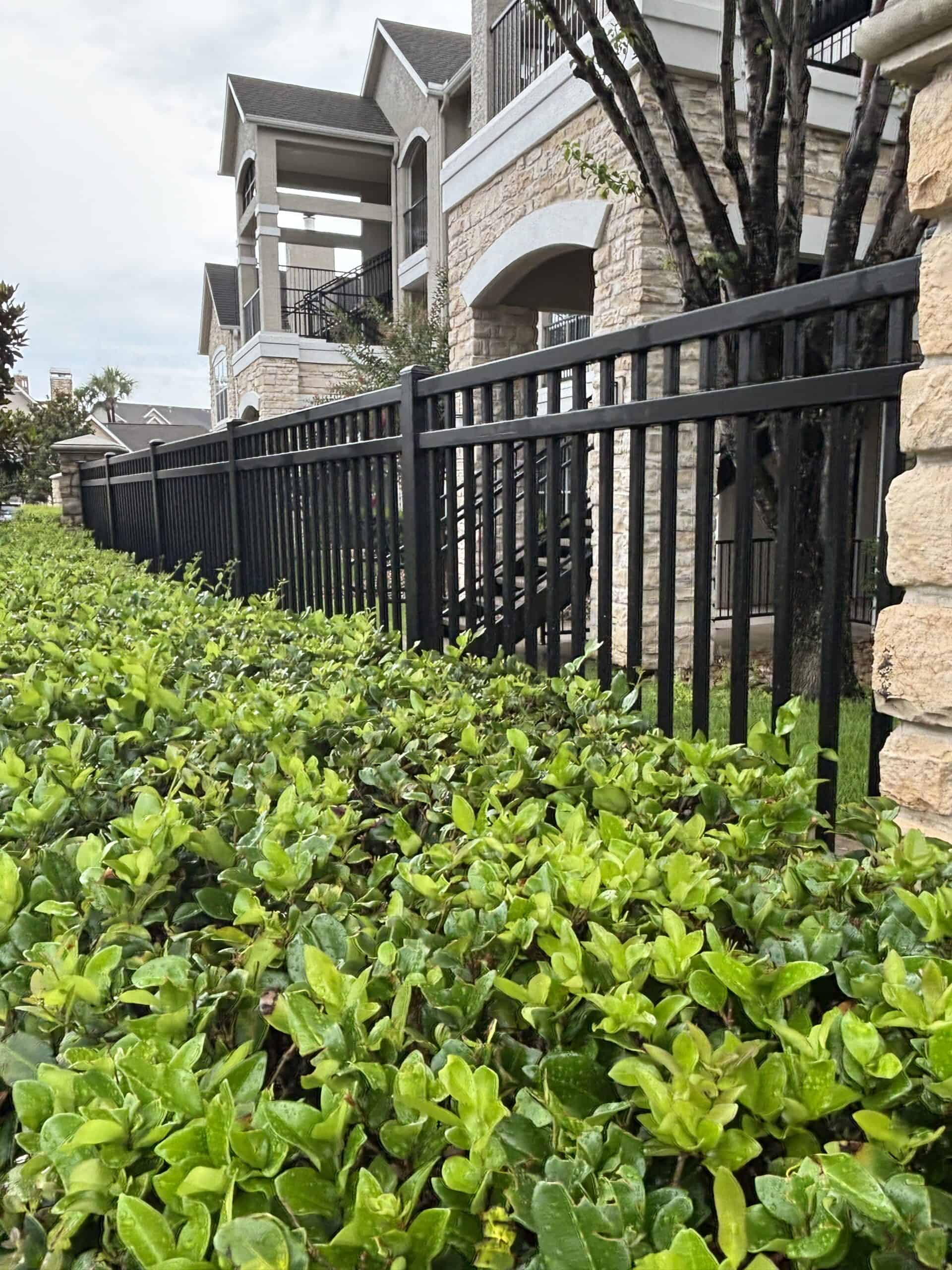
Where powder coating really wins is appearance. It comes in basically any color, it goes on smooth and even, and it resists fading and chipping far better than regular paint. That black, clean finish you see on most ornamental steel fences in Austin — the kind we build out in West Lake Hills, Barton Creek, and Tarrytown — that’s powder coating doing its job.
The tradeoff is that powder coating is a barrier, not a chemical bond. If that barrier gets breached — a deep scratch, a chip from an impact — the protection at that exact spot is gone, and rust can start there if it’s not addressed. This is something we cover in detail in our post on whether a steel fence can be repaired or needs full replacement.
So Which One Actually Lasts Longer?
This is the question everyone really wants answered, and the honest answer depends on what “lasts longer” means to you.
For pure rust prevention, hot dipped galvanizing wins. Galvanized steel typically offers 50 or more years of rust protection compared to powder coating’s typical 15 to 25 year lifespan, because the protection works at a chemical level and keeps working even if the surface gets damaged.
Powder coating on its own is still a long-lasting finish, and for most residential fences, it holds up plenty well. But it’s a different kind of protection — once that polymer barrier is compromised, it doesn’t have a backup plan the way galvanizing does.
Why We Usually Recommend Both
Here’s our actual opinion on this, not just a textbook answer: for most of the ornamental steel fencing we build in Austin, we recommend galvanizing the steel first, then powder coating over it. This is sometimes called a duplex system, and it’s not just adding two coatings together for no reason — it genuinely multiplies the protection.
The galvanizing protects the steel at the chemical level. The powder coat protects the galvanizing and gives you the clean, finished look people want. If the powder coat ever gets chipped, the galvanized layer underneath is still doing its job, which means you’re not looking at a rust spot the moment the surface finish gets damaged.
We’ve used this approach on fences across Round Rock and Pflugerville, where the clay soil already puts stress on posts, and the last thing anyone needs is rust working against the steel at the same time.
Does One Cost More Than the Other?
Generally, hot dipped galvanizing costs more upfront than powder coating alone, mostly because of the process itself — dipping steel into molten zinc requires specialized equipment and facilities that not every fabricator has access to.
But when you look at it as part of a duplex system rather than an either-or choice, the cost difference is smaller than people expect, especially when you consider what you’re protecting against. A fence that needs to be repainted or refinished every decade because the coating failed ends up costing more over time than one built right from the start. We go deeper on long-term cost comparisons in our post on steel fence vs wood fence in Austin.
Does Austin’s Climate Change Which One I Should Choose?
It does, a little, though maybe not in the way people expect. Austin doesn’t have the salt air that coastal cities deal with, which is the environment where galvanizing really proves its worth over everything else. What we do have is intense heat, big swings in humidity, and clay soil that holds moisture against posts at ground level.
That ground-level moisture is exactly where galvanizing earns its keep, because it’s the spot most likely to get scratched during installation or hit with lawn equipment over the years. For fence sections that sit close to the ground or get knocked around by mowers and trimmers, we lean toward galvanizing first. For ornamental sections higher up where appearance matters more than impact resistance, powder coating alone is often plenty.
What Should I Ask For When I Get a Quote?
If you’re getting quotes from different companies, ask specifically what coating process they use and whether it’s galvanizing, powder coating, or both. A lot of companies will just say “powder coated” without mentioning whether there’s galvanizing underneath, and that’s a meaningful difference in how long your fence will actually hold up.
If you’re planning a residential steel fence in Austin and want to make sure it’s built with the right coating from day one, that’s exactly the kind of conversation we have before any work starts — no upsells, just straight answers about what your property actually needs.
Frequently Asked Questions
Can galvanized steel be powder coated?
Yes, and it’s actually the best combination available. Galvanizing protects the steel chemically, and the powder coat applied over it gives you the color and finish you want while adding another layer of protection on top.
Will my powder-coated fence rust if it gets scratched?
It can, if the scratch goes deep enough to expose bare steel and isn’t addressed. That’s the main weakness of powder coating alone — once the barrier is breached, there’s nothing backing it up unless there’s galvanizing underneath.
Is galvanized steel more expensive than powder coated steel?
Galvanizing alone typically costs more upfront due to the specialized process involved. But as part of a combined duplex system, the added cost is often worth it for the extra decades of protection it provides.
Does Proud Steel Fence Co use galvanized steel?
Yes, we use a duplex approach — galvanizing the steel first, then powder coating over it — as our standard for most ornamental fencing. It’s part of how we build fences that last decades in Central Texas conditions, not just look good for the first few years.
If you’re trying to figure out the right coating approach for your property, reach out and we’ll walk you through exactly what we’d recommend and why. Contact Us